The Symptom
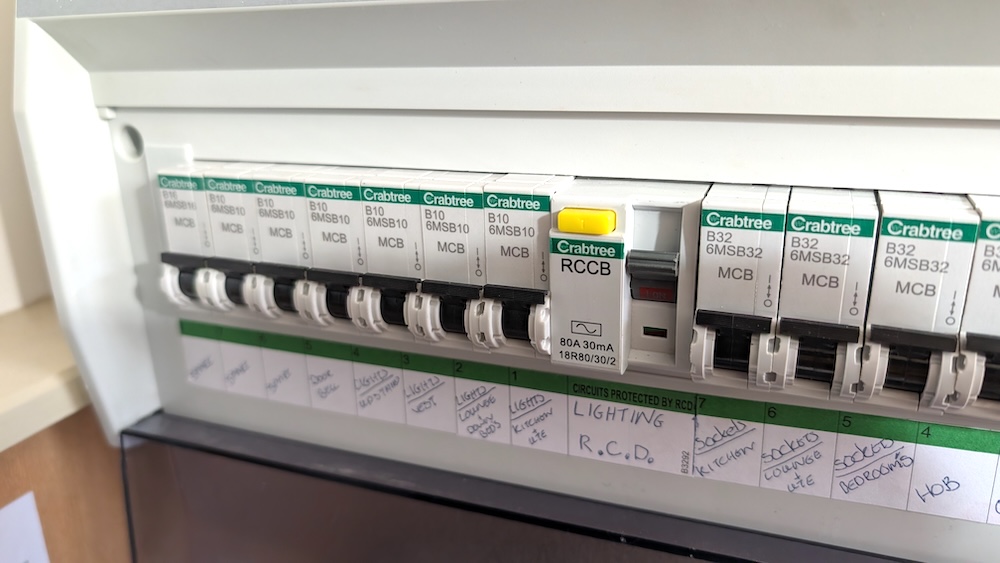
You switch on the kettle while the washing machine and air fryer are running, and suddenly the kitchen sockets lose power. You go to your consumer unit (fuse box), flip the tripped switch back on, and everything works fine—until you turn those appliances back on together.
Why It Happens: Electrical Overload
Unlike a short circuit or an earth fault, which trips the power instantly to prevent immediate danger, a breaker tripping under load is usually doing exactly what it was designed to do: preventing the cables in your walls from overheating.
Every electrical circuit in your home is rated for a maximum current (measured in Amps).
- A standard UK double socket circuit is typically protected by a 32 Amp breaker or RCBO.
- Heating appliances—like kettles, ovens, washing machines, hair dryers, and electric heaters—draw a significant amount of power (often 10 to 13 Amps each).
When you run multiple high-power appliances on the same circuit simultaneously, the total demand exceeds the circuit’s safe capacity. The breaker senses the gradual buildup of heat in the circuit and trips to shut off the power before the wiring insulation melts or causes a fire.
Why It Doesn’t Always Trip Instantly
One reason overload trips confuse homeowners is that they don’t always happen the second you turn an appliance on. You might switch on the hob or a kettle, and the power only cuts out 10 or 15 minutes later.
- How the Breaker Senses Overload: Standard circuit breakers and RCBOs use a bi-metallic strip that bends as current passes through and heats it up.
- Slight Overload = Thermal Delay: If a 32 Amp circuit is pulling 36 Amps, the strip heats up gradually. It can take 5 to 20 minutes for the metal to bend enough to release the latch and shut off the power.
- Heavy Overload = Faster Trip: The more current you draw over the circuit’s rated limit, the faster that strip heats up and trips.
This thermal delay is a built-in safety feature designed to tolerate brief, harmless surges (like a fridge motor kicking in) while still protecting your wall cables from slow, sustained overheating. The appliance you turned on right before the trip wasn’t necessarily faulty—it was simply the “final straw” that tipped an already hot circuit over its safety threshold.
Quick Things You Can Check Yourself
- Identify the Heavy Loaders: Note which appliances were running at the exact moment the trip occurred.
- Spread the Load: Plug high-draw appliances into sockets on different circuits where possible (e.g., using a dedicated kitchen circuit rather than running everything off an extension lead).
- Check for Extension Lead Overuse: Multi-way extension leads do not increase the safe capacity of a socket. Running a kettle and a toaster off the same 4-way strip is a common trigger for overload trips.
When to Call a Qualified Electrician
If your circuit breaker continues to trip even when only one or two low-power appliances are plugged in, the issue may not be a simple overload. It could indicate:
- A developing fault inside a specific appliance.
- A loose, overheating connection inside a socket outlet.
- A worn-out or faulty circuit breaker at the consumer unit.